3D Artifact Scanning — Academia Nacional de Ciencias
Letting anyone rotate a 160-million-year-old fossil without touching it
- LiDAR
- iPhone
- Photogrammetry
- 3D Scanning
Where it started
The Academia's collection was full of things you normally only see behind glass: fossils, meteorites, gemstones, botanical records, old scientific instruments. We'd already tried the artifact-scanning approach at Museo Evita and liked where it led, so we brought it here to open those objects up to people who'd never get the chance to hold them.
What we set out to do
The principle was the same as always, aimed at a different collection: remove the barrier between object and public, break the "virtual display case" that keeps a person away from the piece. We wanted someone to be able to rotate a fossil in detail and read its context, without an irreplaceable specimen ever leaving its case.
How we found our way
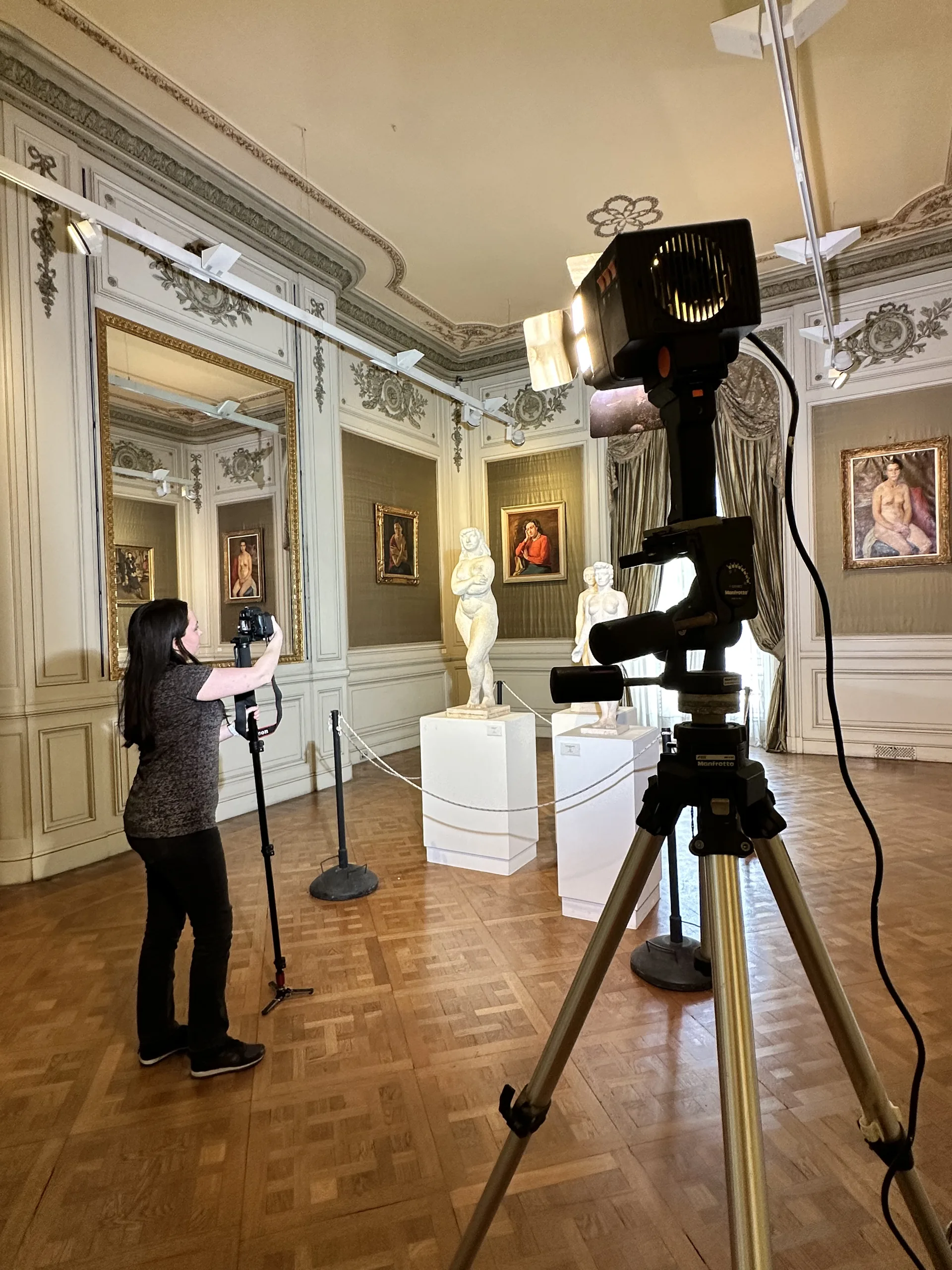
We reused the iPhone-and-LiDAR method we'd been refining at Museo Evita: circle the object with the camera from as many angles as possible, as if tracing a sphere around the piece, and rebuild the model from that depth data. We scanned around twenty pieces: fossils dating back some 160 million years, meteorites, gemstones, instruments and botanical records. On the non-organic pieces, the detail the sensor picked up was genuinely useful, even for study.
What got in the way
The taxidermied fauna defeated us. Fur, feathers, glass eyes and specimens in formaldehyde all confuse the sensor's optics, and the models come out broken, fragmented. We had to accept that some objects simply can't be captured this way, and plan the catalogue around what the method does well.
“LiDAR ends where fur and formaldehyde begin”
Where it is today
The scans are embedded in the Academia's digital twin as a layer of scientific interactivity. The project finished making the underlying idea concrete: digitisation isn't only technical — it's a form of access, and it lives or dies on close coordination with the people who care for the collection.
- Nicolas Gandolfo — Design & Innovation Lead
- Guadalupe Rickel — Project Manager · Creative · Cinematic Specialist
- Tomas Celoira Prince — Product Designer · Creative · 3D Artist
Products in the wild
- AI Guide Totem — Museo Emilio Carafa →A photoreal 3D guide on a touchscreen totem, answering visitors in real time
- Digital Twin — Museo Evita Palacio Ferreyra →A navigable virtual twin of the museum, layered with narration and 3D detail
- VR Experience — Academia Nacional de Ciencias, Conquista del Desierto →Grab a lamp and a museum room becomes a Patagonia that talks back